The line on the board: what OKC -7.5 is really telling us
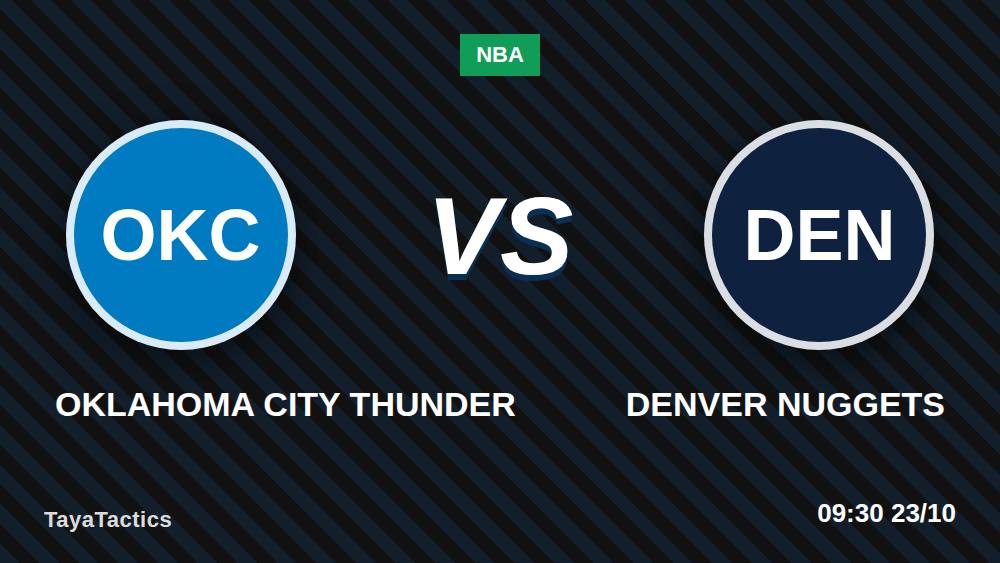
Opening night at the Paycom Center, and the market has already made its statement: Oklahoma City Thunder -7.5 over the Denver Nuggets, with the total sitting at 236.5. Tip-off is 01:30 UTC on 23 October 2026, which lands on the evening of 22 October for anyone watching from Manila — perfect timing for a Thursday-night viewing session with a cold one and a live bet slip open.
Before you touch this game, understand what a 7.5 number means in the context of an NBA opener. This is not a midseason line built on 40 games of data. It is a line built on reputation, roster continuity, and the market's assumption about which team is healthier and more coherent in week one. Oklahoma City being favoured by this much at home tells you the bookmakers believe the Thunder are the deeper, more settled unit right now, and that Denver still has questions to answer on the road with a shorter rotation.
Here is the practical part. A 7.5-point favourite at home in an opener is a classic "resistance point" number. Casual money flows to the home favourite and the marquee name. Sharp money tends to test the other side, especially when the total is as high as 236.5, because a high total implies pace, and pace implies variance, and variance helps the underdog cover. That tension is exactly where value lives.
| Info | Detail |
|---|---|
| Competition | NBA |
| Kick-off | 09:30 23/10/2026 (GMT+8) |
| Venue | Paycom Center |
| Oklahoma City Thunder form | - |
| Denver Nuggets form | - |
| Reference odds | OKC -7.5 |
| Over/Under | 236.5 |
Reading the matchup through the total, not just the spread
Most bettors look at this game and ask one question: can OKC win by eight or more? That is the wrong starting point. Start with the 236.5 and work backwards.
A total that high tells you the market expects both teams to play fast and both teams to score efficiently. Denver's half-court offence is built around interior passing and cutting, which generates high-percentage looks and keeps the clock moving. Oklahoma City's transition game is one of the fastest in the league when their young core is healthy, and they generate a lot of points off turnovers. Put those two together and 236.5 is not an inflated number — it is a fair reflection of two teams who both prefer to play with tempo.
So the practical question becomes: if this game is going to be a track meet, does a 7.5-point cushion matter as much? Generally, no. Blowouts happen in high-total games, but they happen less reliably than in grind-it-out games, because fast-paced games produce more possessions and more possessions give the trailing team more chances to chip away. If you are leaning Oklahoma City, you are effectively betting on a blowout in a game where the pace profile suggests a closer contest. If you are leaning Denver, you are betting on the pace keeping it tight and the Nuggets' half-court execution covering the number late.
Rule of thumb for openers: when the total is above 235 and the spread is above 7, the underdog and the over tend to be the more efficient sides to shop. It is not a guarantee — it is where the pricing edge usually sits.
The table: where the value actually sits
Look at the table above for the raw numbers — spread, total, venue, kickoff. What the table will not tell you is how those numbers move between now and tip-off. That is your job.
Track this line through the week. If OKC -7.5 holds steady into game day, the market has confidence in the home side and the sharps have not found a reason to push back. If it drifts to -6.5 or -8.5, pay attention to the direction. A move toward Denver (line dropping to -6.5) usually means informed money is on the Nuggets, and you should consider whether your own read agrees. A move toward OKC (line climbing to -8.5) means the market is loading up on the favourite, and the value on Denver improves.
The same logic applies to the 236.5. A total that climbs to 239 tells you the market expects even more pace; a total that drops to 233 tells you someone with real information expects a slower, more physical game. Do not chase the number. Let the number come to you, and only fire when your read and the market's move agree.
Bankroll mechanics: staking this specific game
Here is where most Filipino bettors give back their edge. You can read the line perfectly and still lose money because you staked it badly. On a game like this — an opener with real uncertainty — your unit size should be smaller than your standard play.
If your standard unit is 2% of bankroll, this game deserves 1% to 1.5% on a single side. Opener variance is real. Rotations are unsettled, minutes are unpredictable, and coaches are still experimenting. That is not a reason to skip the game; it is a reason to size down and treat it as an information-gathering bet as much as a value bet.
On the platform side, use the mechanics to your advantage. Most reputable books running Philippine-facing NBA markets process GCash and Maya deposits in under five minutes with a minimum of ₱200 to ₱500, and e-wallet withdrawals typically clear in 15 to 60 minutes. If you are on a book that takes 24 to 48 hours to pay out, you are tying up bankroll you could be recycling into the next night's card. Check your book's rollover requirement before you deposit — a 5x wagering requirement on a bonus means you need to turn over five times the bonus amount before withdrawal, and on a -110 spread bet that is a lot of action to generate.
Keep your staking disciplined and your accounts diversified across at least two books so you can line-shop. Getting -7.5 at one book and -6.5 at another is a full point of edge, and over a season that point is worth more than any single hot streak.
How to actually play the 236.5 total
The total is the more interesting market here. At 236.5, you are being asked whether these two teams combine for 237 or more. Given the pace profiles, the over is the natural lean, but the price matters.
Shop the number aggressively. If one book has 236.5 and another has 238.5, the difference is enormous in a game projected this close to the line. Take the higher number if you are on the over and the lower number if you are on the under. Do not accept the first total you see.
Consider the live angle too. Openers often start slow as both teams feel each other out, then the pace picks up in the second and third quarters. If the first quarter comes in low-scoring and the live total drops below 232, that is often a better entry point for an over bet than the pre-game number. Live betting on totals is where disciplined bettors find real edges, because the market overreacts to a slow five-minute stretch.
If you prefer the under, you are betting on Denver slowing the game down and using their half-court offence to shorten possessions. That is a legitimate read, but it requires Denver to be healthy and engaged on the defensive end from the opening tip — something that is not guaranteed in week one.
Building the bet slip: a practical construction
Here is how a sharp bettor might actually construct this card, using the numbers we have.
- Primary position: Denver +7.5 at 1.91 (-110) for 1% of bankroll. The pace profile and opener variance favour the underdog covering a big number on the road.
- Secondary position: Over 236.5 at 1.91 (-110) for 0.75% of bankroll. Both teams want to run, and the total is priced fairly rather than inflated.
- Live trigger: If the live total drops below 232 in the first half, add 0.5% on the over at the improved number.
- Pass: Do not parlay the spread and the total together. They are correlated — a fast game helps the over and helps Denver cover — and parlaying correlated legs is how you turn a small edge into a big loss.
Total exposure on this game: roughly 2.25% of bankroll. That is a sensible ceiling for an opener with this much uncertainty. If you want more action, wait for the in-game market, where you will have actual data on rotations and pace instead of projections.
Final word on the 23 October card
Oklahoma City at -7.5 is a fair line, not a gift. The market has priced the Thunder's continuity and home advantage correctly, and the 236.5 total reflects two teams who want to play fast. The edge here is not in picking a winner with confidence — it is in recognising that opener variance, pace, and a big spread combine to make the underdog and the over the more efficient sides, and in staking accordingly.
Shop your lines across at least two books, size down for the opener, and treat the live market as your second bite at the apple. That is how you turn a single Thursday-night game into a repeatable process rather than a coin flip.